Spinosaurus
Order: Saurischia · Suborder: Theropoda · Infraorder: Megalosauroidea · Family: Spinosauridae
Spinosaurus, whose name means "spine lizard," was one of the longest known carnivorous dinosaurs, measuring 49 to 52 feet in length. This giant predator lived during the Late Cretaceous period in North Africa, thriving in a vast river system where it hunted fish. Unlike the terrestrial predators of its time, Spinosaurus shows clear adaptations to a semi-aquatic lifestyle, marking it as a remarkable example of dinosaur specialization.
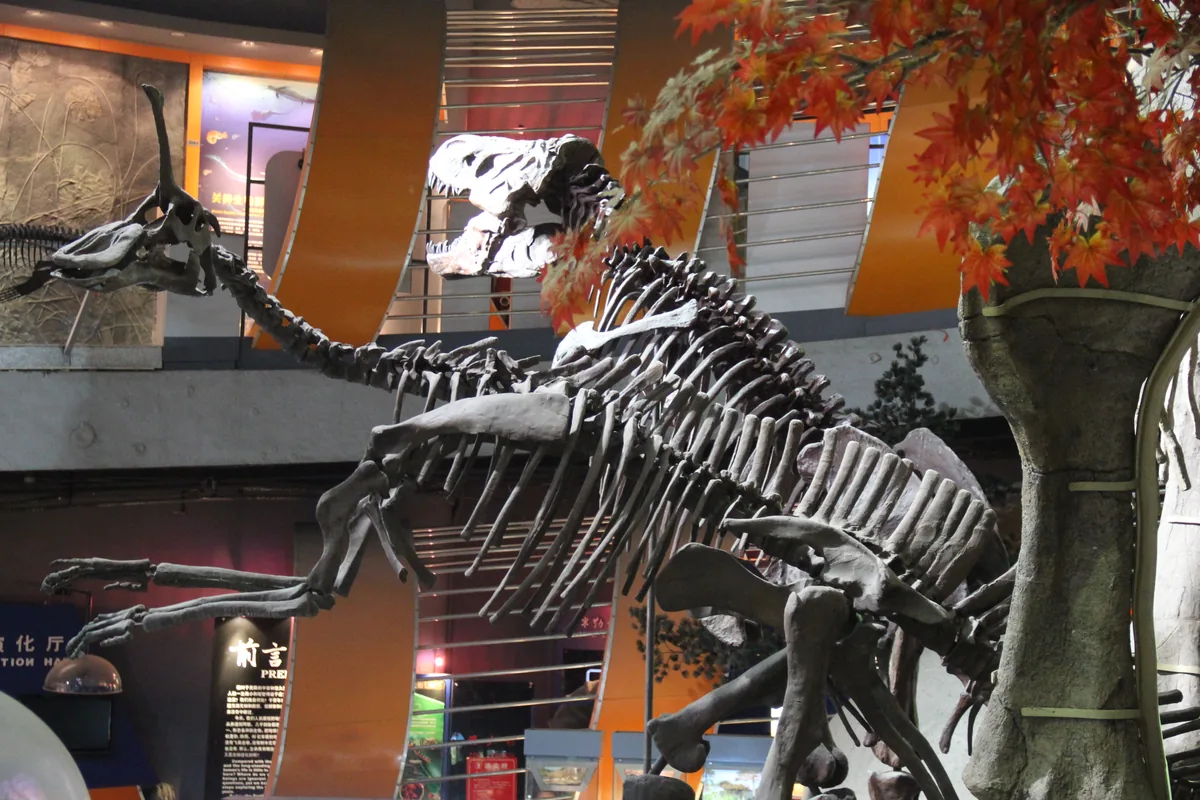
The most distinctive feature of Spinosaurus was the tall sail that ran along its back, formed by elongated spines supported by bones extending up to about 1.6 metres in length. Beyond this striking sail, the dinosaur possessed a long, crocodile-like snout lined with conical teeth perfectly suited for gripping slippery prey. Its skeleton also included dense bones that would have aided in diving and swimming, while a paddle-like tail provided propulsion through water. These combined features—the robust snout, specialized dentition, heavy bones, and powerful tail—reveal that Spinosaurus spent much of its existence in aquatic environments, hunting fish rather than relying on the hunting strategies of land-based carnivores.
More Cretaceous-period dinosaurs →
Reference background: Natural History Museum, London — Dinosaurs; Smithsonian National Museum of Natural History — Dinosaurs; American Museum of Natural History — Dinosaurs & Fossils. Figures are typical published ranges; taxonomy follows the source era and modern consensus is noted where it differs. See our sources & fact-check policy.
Frequently asked questions
What does Spinosaurus mean?
The name Spinosaurus means “Spine lizard”.
When did Spinosaurus live?
Spinosaurus lived during the Late Cretaceous.
Was Spinosaurus a carnivore or a herbivore?
Spinosaurus was a piscivore.
How big was Spinosaurus?
Spinosaurus was about 49-52 feet (15-16 meters) long.
Related dinosaurs
Other dinosaurs from the Spinosauridae family.
Compare the dinosaurs
See size, diet, period and family for hundreds of dinosaurs side by side.
Compare dinosaurs →