Patagotitan
Order: Saurischia · Suborder: Sauropoda · Infraorder: Titanosauria · Family: Titanosauria (family not firmly confirmed)
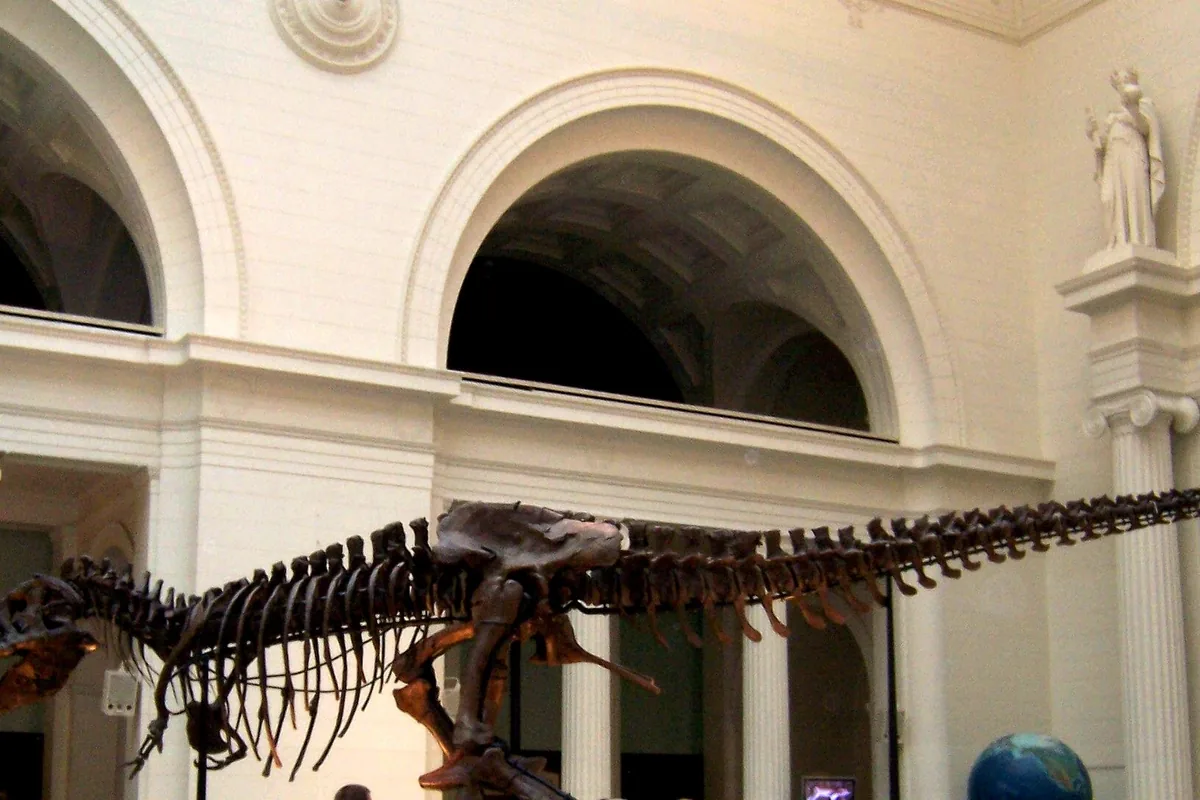
Patagotitan, whose name means "Patagonian titan," was among the largest land animals ever to have lived. This colossal herbivore roamed Patagonia, Argentina, during the Late Cretaceous period and could reach lengths of 100 to 120 feet (30 to 37 meters). As a member of the titanosaur family, Patagotitan shared the characteristic body plan of its relatives: an extremely long neck and tail, a massive barrel-shaped body, and sturdy pillar-like legs built to bear its tremendous weight.
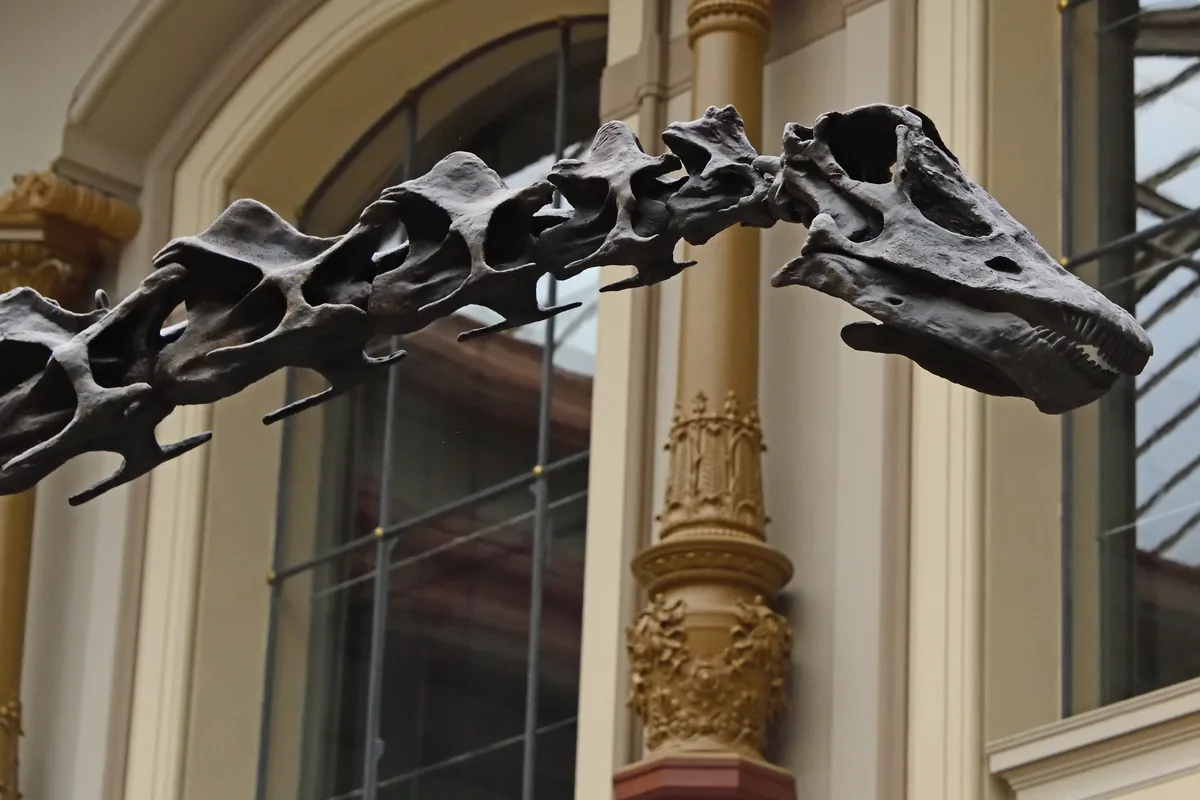
Paleontologists have recovered the remains of several Patagotitan individuals, making it one of the better-known giant sauropods. Casts of its skeleton have been mounted in museum collections around the world, allowing scientists and the public alike to appreciate the sheer scale of this creature. As a plant-eater, Patagotitan would have consumed enormous quantities of vegetation daily simply to fuel its gigantic frame. The dinosaur stands as a striking testament to the extreme gigantism that some sauropod lineages achieved during the Cretaceous, representing a peak of size in terrestrial animal evolution.
More Cretaceous-period dinosaurs →
Reference background: Natural History Museum, London — Dinosaurs; Smithsonian National Museum of Natural History — Dinosaurs; American Museum of Natural History — Dinosaurs & Fossils. Figures are typical published ranges; taxonomy follows the source era and modern consensus is noted where it differs. See our sources & fact-check policy.
Frequently asked questions
What does Patagotitan mean?
The name Patagotitan means “Patagonian titan”.
When did Patagotitan live?
Patagotitan lived during the Late Cretaceous.
Was Patagotitan a carnivore or a herbivore?
Patagotitan was a herbivore.
How big was Patagotitan?
Patagotitan was about 100-120 feet (30-37 meters) long.
Related dinosaurs
Other dinosaurs from the Titanosauria family.
Compare the dinosaurs
See size, diet, period and family for hundreds of dinosaurs side by side.
Compare dinosaurs →