Mamenchisaurus
Order: Saurischia · Suborder: Sauropodomorpha · Infraorder: Sauropoda · Family: Euhelopodidae
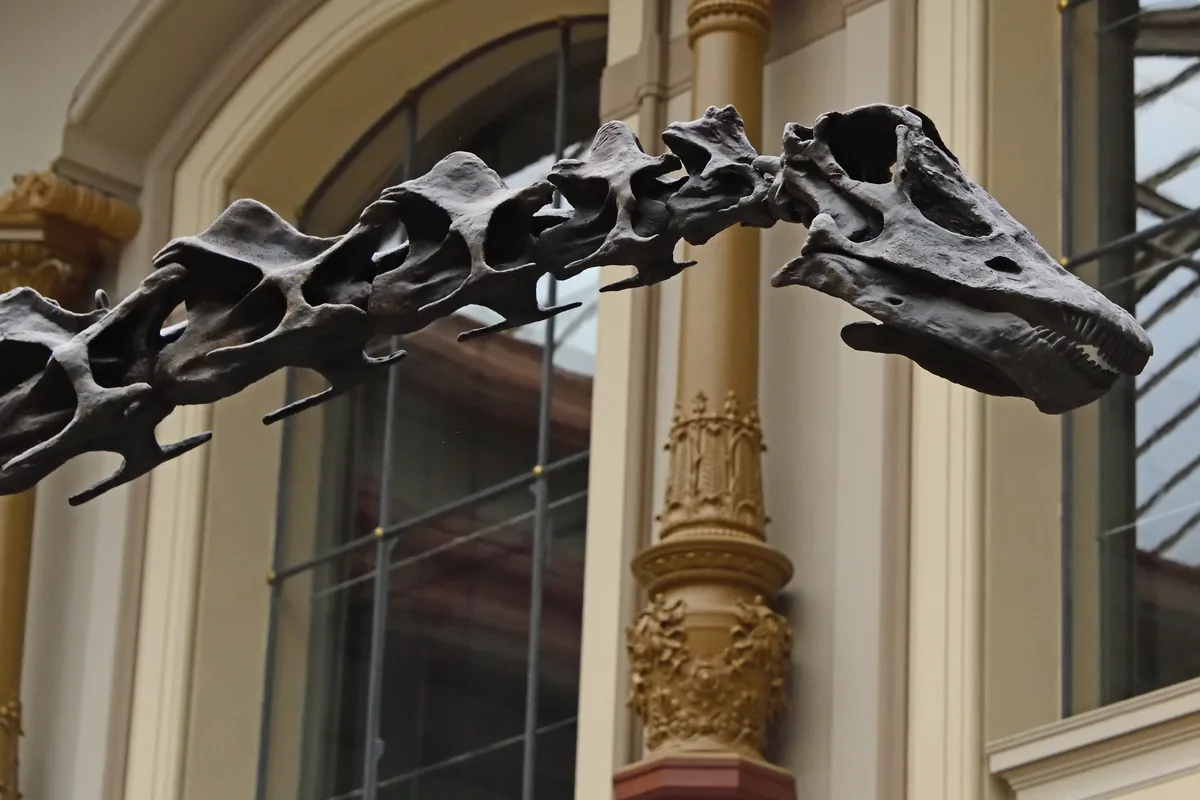
Mamenchisaurus, the largest known dinosaur from Asia, has the longest known neck of any dinosaur, measuring up to 36 feet and containing 19 vertebrae. The vertebrae are similar to those found in Omeisaurus and Tienshanosaurus but it's limb, foot and ankle bones resemble Apatosaurus resulting in its classification as a diplodocid. It was thought to be related to Diplodocus, but its skull, recently discovered, resembles that of Euhelopus. Further studies have determined that members of this genus, as well as other Chinese sauropods from this time, such as Euhelopus, share enough unique characteristics to constitute a separate sauropod family Euhelopodidae.
More Jurassic-period dinosaurs →
Reference background: Natural History Museum, London — Dinosaurs; Smithsonian National Museum of Natural History — Dinosaurs; American Museum of Natural History — Dinosaurs & Fossils. Figures are typical published ranges; taxonomy follows the source era and modern consensus is noted where it differs. See our sources & fact-check policy.
Frequently asked questions
What does Mamenchisaurus mean?
The name Mamenchisaurus means “Mamenchi (China) Lizard”. It is pronounced mah-MEN-chih-SAWR-us.
When did Mamenchisaurus live?
Mamenchisaurus lived during the Late Jurassic.
Was Mamenchisaurus a carnivore or a herbivore?
Mamenchisaurus was a herbivore.
How big was Mamenchisaurus?
Mamenchisaurus was about Total length 69 feet (21 meters); long, around 35 feet (10.7 meters) tall, weighing up to 60,000 pounds (27,216 kg).
Related dinosaurs
Other dinosaurs from the Euhelopodidae family.
Compare the dinosaurs
See size, diet, period and family for hundreds of dinosaurs side by side.
Compare dinosaurs →