Sauroposeidon
Order: Saurischia · Suborder: Sauropoda · Infraorder: Titanosauriformes · Family: Brachiosauridae (family not firmly confirmed)
Sauroposeidon was an enormous long-necked sauropod dinosaur that lived during the Early Cretaceous period in North America. Its name translates as "earthquake god lizard," and it belonged to the order Saurischia, the suborder Sauropoda, and the family Brachiosauridae, making it closely related to Brachiosaurus.
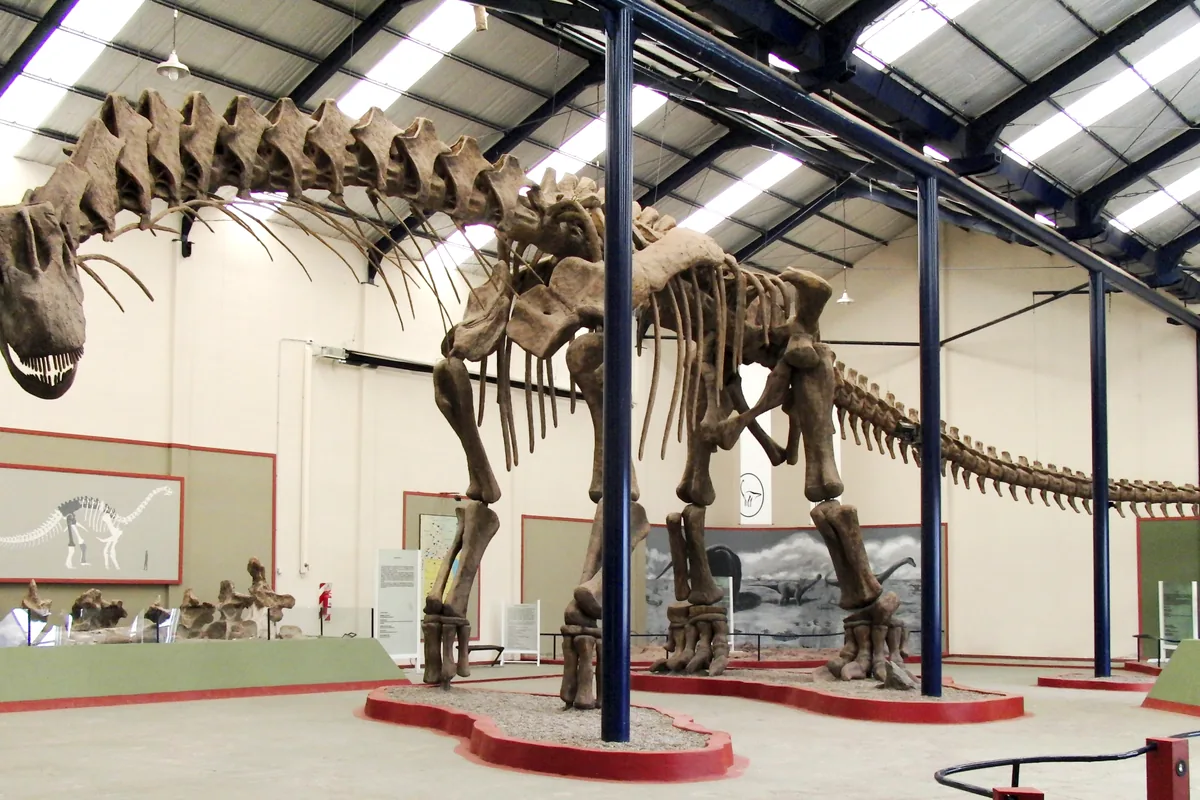
The dinosaur is recognized mainly from a set of gigantic neck vertebrae discovered in Oklahoma, the largest of which is well over a metre long. Estimates place its length at roughly 90 to 112 feet, or approximately 27 to 34 meters, and it is considered probably one of the tallest dinosaurs ever known.
Like other brachiosaurids, Sauroposeidon held its long neck high, which would have allowed it to browse foliage far above the ground. Estimates suggest it may have been able to raise its head many metres into the air, making it a giraffe-like giant within its ecosystem. As a member of the infraorder Titanosauriformes, it was a herbivore, relying entirely on plant material for sustenance.
More Cretaceous-period dinosaurs →
Reference background: Natural History Museum, London — Dinosaurs; Smithsonian National Museum of Natural History — Dinosaurs; American Museum of Natural History — Dinosaurs & Fossils. Figures are typical published ranges; taxonomy follows the source era and modern consensus is noted where it differs. See our sources & fact-check policy.
Frequently asked questions
What does Sauroposeidon mean?
The name Sauroposeidon means “Earthquake god lizard”.
When did Sauroposeidon live?
Sauroposeidon lived during the Early Cretaceous.
Was Sauroposeidon a carnivore or a herbivore?
Sauroposeidon was a herbivore.
How big was Sauroposeidon?
Sauroposeidon was about 90-112 feet (27-34 meters) long.
Related dinosaurs
Other dinosaurs from the Brachiosauridae family.
Compare the dinosaurs
See size, diet, period and family for hundreds of dinosaurs side by side.
Compare dinosaurs →