Euoplocephalus
Order: Ornithischia · Suborder: Thyreophora · Infraorder: Ankylosauria · Family: Ankylosauridae
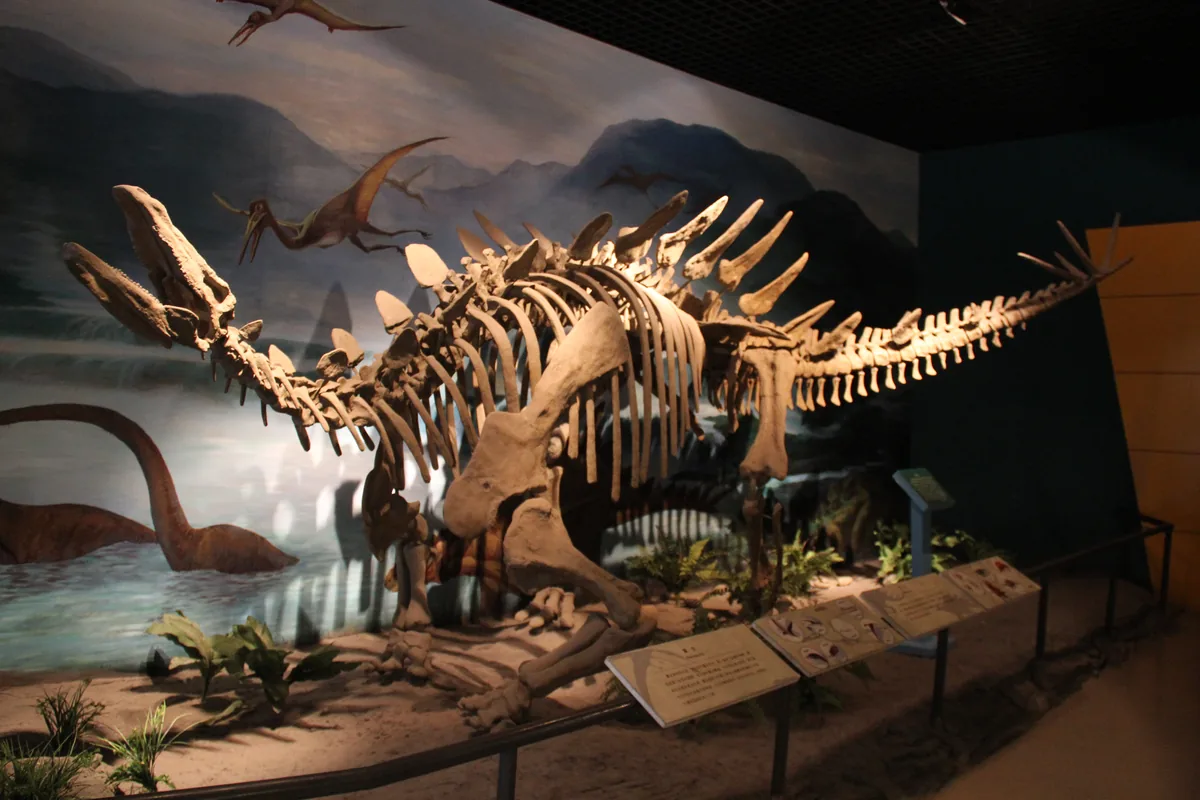
Discovered in Alberta, Canada, Euoplocephalus is oneof the best-known armored dinosaurs. The upper part of its body, including its eyelids, was covered with bony plates and rows of horny spikes up to six inches (15 cm) long. Built low to the ground with massive, short leg bones, this "armored tank" had a distinctiveclubbed tail. The many Euoplocephalus skeletons recovered have all been found isolated from one another, leading to the picture of this dinosaur as a solitary grazer.
More Cretaceous-period dinosaurs →
Reference background: Natural History Museum, London — Dinosaurs; Smithsonian National Museum of Natural History — Dinosaurs; American Museum of Natural History — Dinosaurs & Fossils. Figures are typical published ranges; taxonomy follows the source era and modern consensus is noted where it differs. See our sources & fact-check policy.
Frequently asked questions
What does Euoplocephalus mean?
The name Euoplocephalus means “Well-protected Head”. It is pronounced you-op-luh-SEF-uh-lus.
When did Euoplocephalus live?
Euoplocephalus lived during the Late Cretaceous.
Was Euoplocephalus a carnivore or a herbivore?
Euoplocephalus was a herbivore.
How big was Euoplocephalus?
Euoplocephalus was about 20 feet (6.1 meters) long, around 6 feet (1.8 meters) tall, weighing up to 3,970 - 7,050 pounds (1,800-3,175 kg).
Related dinosaurs
Other dinosaurs from the Ankylosauridae family.
Compare the dinosaurs
See size, diet, period and family for hundreds of dinosaurs side by side.
Compare dinosaurs →