Diplodocus
Order: Saurischia · Suborder: Sauropodomorpha · Infraorder: Sauropoda · Family: Diplodocidae
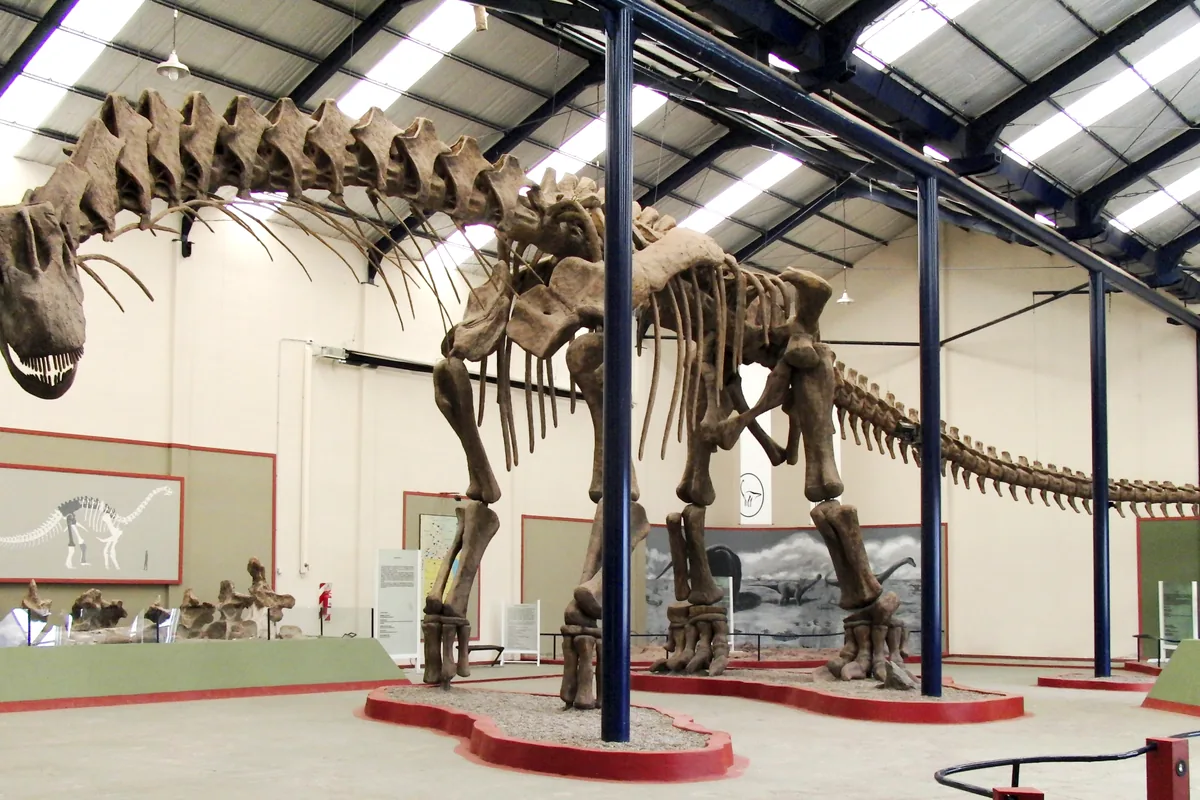
Discovered in the western United States, the Diplodocusskeletons are among the longest dinosaur skeletons ever found. Diplodocus' neck contained 15 bones and the tail had anywhere from 70 to 90 although a complete tail has never been found. Diplodocus had an elongated snout, with nostrils on top of the head and peg like teeth only at the front of its mouth. Its limbs were slender and its hind legs were longer than the front legs giving it access to both low and high growing plants. It also had one of the smallest brains in Dinosauria. Andrew Carnegie funded many of the Diplodocus digs, and the best Diplodocus skeleton is named for him -- Diplodocus carnegii.
More Jurassic-period dinosaurs →
Reference background: Natural History Museum, London — Dinosaurs; Smithsonian National Museum of Natural History — Dinosaurs; American Museum of Natural History — Dinosaurs & Fossils. Figures are typical published ranges; taxonomy follows the source era and modern consensus is noted where it differs. See our sources & fact-check policy.
Frequently asked questions
What does Diplodocus mean?
The name Diplodocus means “Double Beam”. It is pronounced dih-PLOD-uh-kus.
When did Diplodocus live?
Diplodocus lived during the Late Jurassic.
Was Diplodocus a carnivore or a herbivore?
Diplodocus was a herbivore.
How big was Diplodocus?
Diplodocus was about 89 feet (27.1 meters) long, around 30 feet (9.1 meters) tall, weighing up to 55,000 pounds (22,680 kg).
Related dinosaurs
Other dinosaurs from the Diplodocidae family.
Compare the dinosaurs
See size, diet, period and family for hundreds of dinosaurs side by side.
Compare dinosaurs →