Deinonychus
Order: Saurischia · Suborder: Theropoda · Infraorder: Tetanurae · Family: Dromaeosauridae
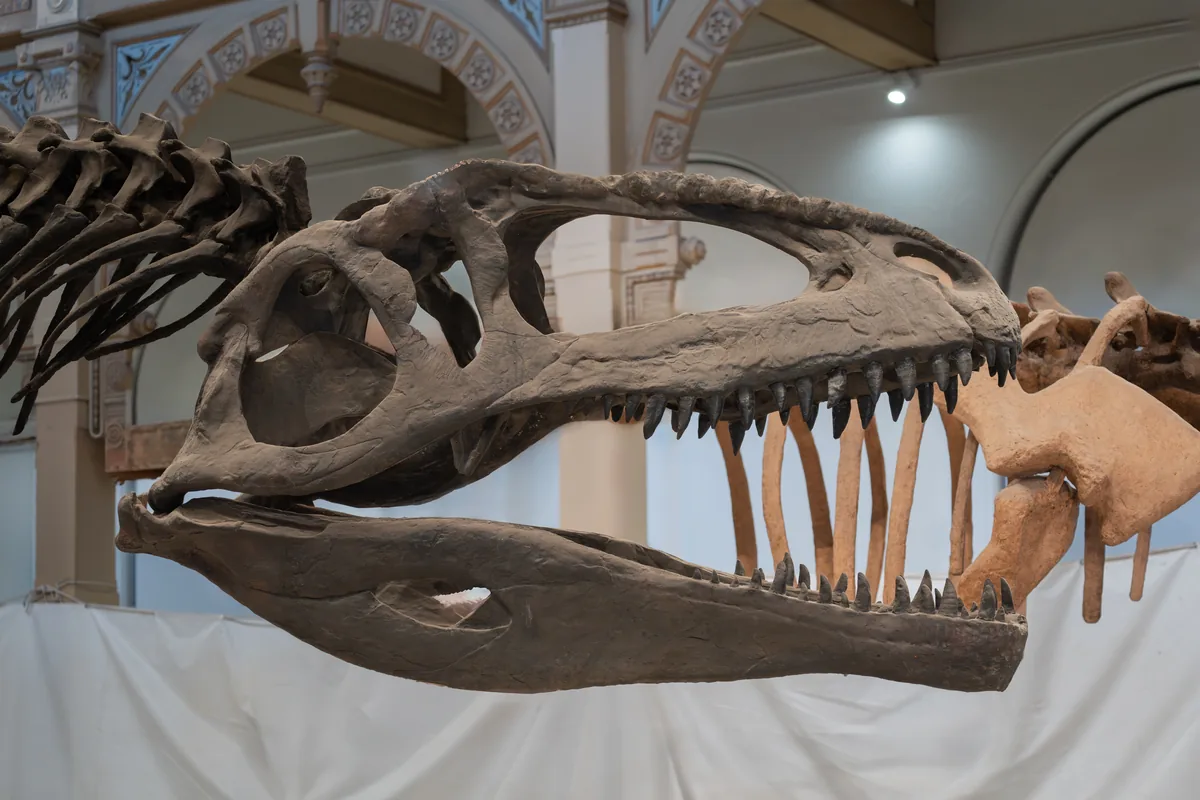
The discovery of this dinosaur in Montana in 1964 drastically altered the traditional view of dinosaurs as sluggish, slow-moving reptiles. Deinonychus was obviously built for speedy pursuit of its prey. Among other things, it had special interlocking vertebrae that allowed its tail to stiffen for balance while running. Excellent eyesight, sharp, serratedteeth that curve backwards for slicing, and the namesake 5-inch (13 cm) long, knife-like claws on each foot make Deinonychus a fearsome hunter. Five specimens were found together, leading to the theory that Deinonychushunted in packs.
More Cretaceous-period dinosaurs →
Reference background: Natural History Museum, London — Dinosaurs; Smithsonian National Museum of Natural History — Dinosaurs; American Museum of Natural History — Dinosaurs & Fossils. Figures are typical published ranges; taxonomy follows the source era and modern consensus is noted where it differs. See our sources & fact-check policy.
Frequently asked questions
What does Deinonychus mean?
The name Deinonychus means “Terrible Claw”. It is pronounced dye-NON-ik-us.
When did Deinonychus live?
Deinonychus lived during the Early Cretaceous.
Was Deinonychus a carnivore or a herbivore?
Deinonychus was a carnivore.
How big was Deinonychus?
Deinonychus was about 9 feet (2.7 meters) long, around 5 feet (1.5 meters) tall, weighing up to 175 lbs (79.4 kg).
Related dinosaurs
Other dinosaurs from the Dromaeosauridae family.
Compare the dinosaurs
See size, diet, period and family for hundreds of dinosaurs side by side.
Compare dinosaurs →