Cryolophosaurus
Order: Saurischia · Suborder: Theropoda
Cryolophosaurus, whose name means "cold crest lizard," was a large carnivorous theropod that prowled Antarctica during the Early Jurassic period. Measuring between 20 and 25 feet in length, it stands as one of the first dinosaurs ever discovered on the Antarctic continent, making it a significant find for paleontologists studying early theropod evolution. The dinosaur's most striking feature was a distinctive crest that ran across the top of its head from side to side, resembling a comb in shape. Researchers believe this crest functioned primarily as a display structure, serving purposes such as species recognition and social or mating displays rather than as a hunting weapon.
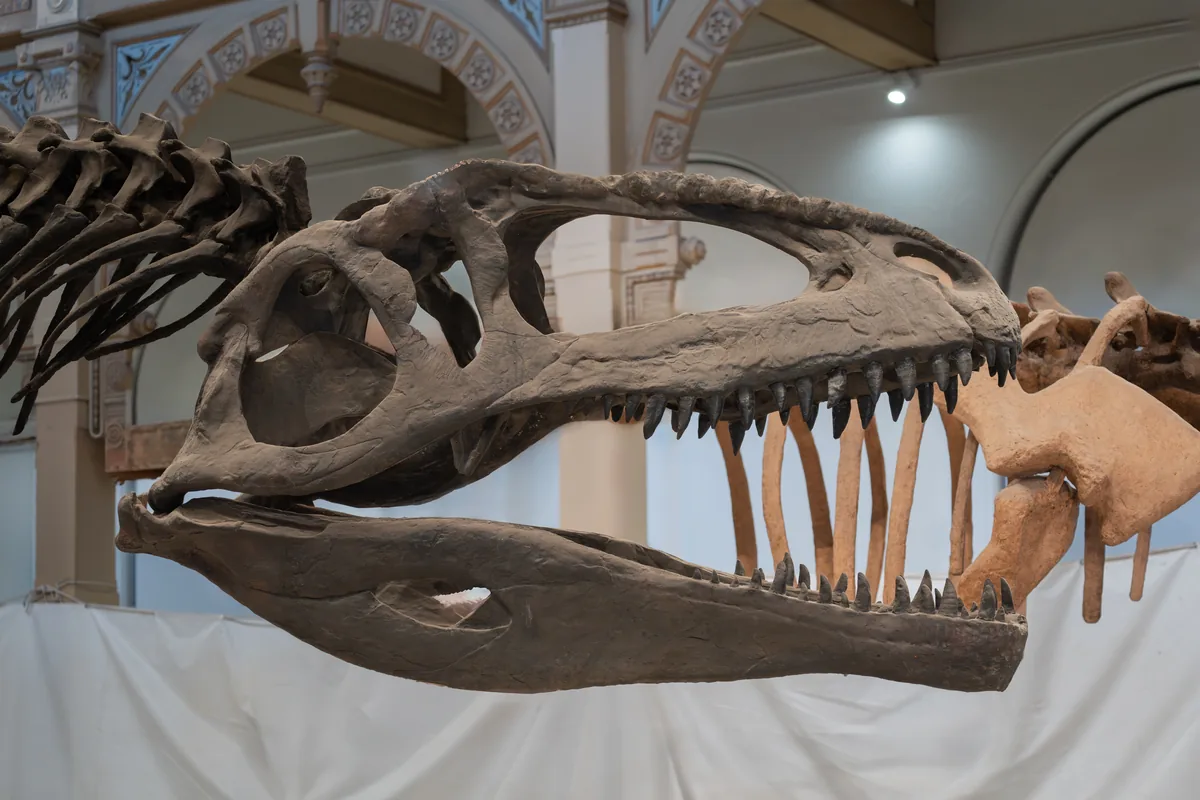
As a sizable predator, Cryolophosaurus occupied a position among the top hunters of its ancient Antarctic ecosystem. During the time this dinosaur lived, Antarctica was considerably warmer than it is today and remained free of ice, supporting diverse plant and animal life. The discovery of Cryolophosaurus has proven invaluable to scientists seeking to understand the anatomy, behavior, and evolutionary development of early large theropods, offering crucial insights into how these dominant carnivores developed and adapted to their environments during the Early Jurassic.
More Jurassic-period dinosaurs →
Reference background: Natural History Museum, London — Dinosaurs; Smithsonian National Museum of Natural History — Dinosaurs; American Museum of Natural History — Dinosaurs & Fossils. Figures are typical published ranges; taxonomy follows the source era and modern consensus is noted where it differs. See our sources & fact-check policy.
Frequently asked questions
What does Cryolophosaurus mean?
The name Cryolophosaurus means “Cold crest lizard”.
When did Cryolophosaurus live?
Cryolophosaurus lived during the Early Jurassic.
Was Cryolophosaurus a carnivore or a herbivore?
Cryolophosaurus was a carnivore.
How big was Cryolophosaurus?
Cryolophosaurus was about 20-25 feet (6-7.5 meters) long.
Related dinosaurs
Other dinosaurs from the same period.
Compare the dinosaurs
See size, diet, period and family for hundreds of dinosaurs side by side.
Compare dinosaurs →