Camarasaurus
Order: Saurischia · Suborder: Sauropodomorpha · Infraorder: Sauropoda · Family: Camarasauridae
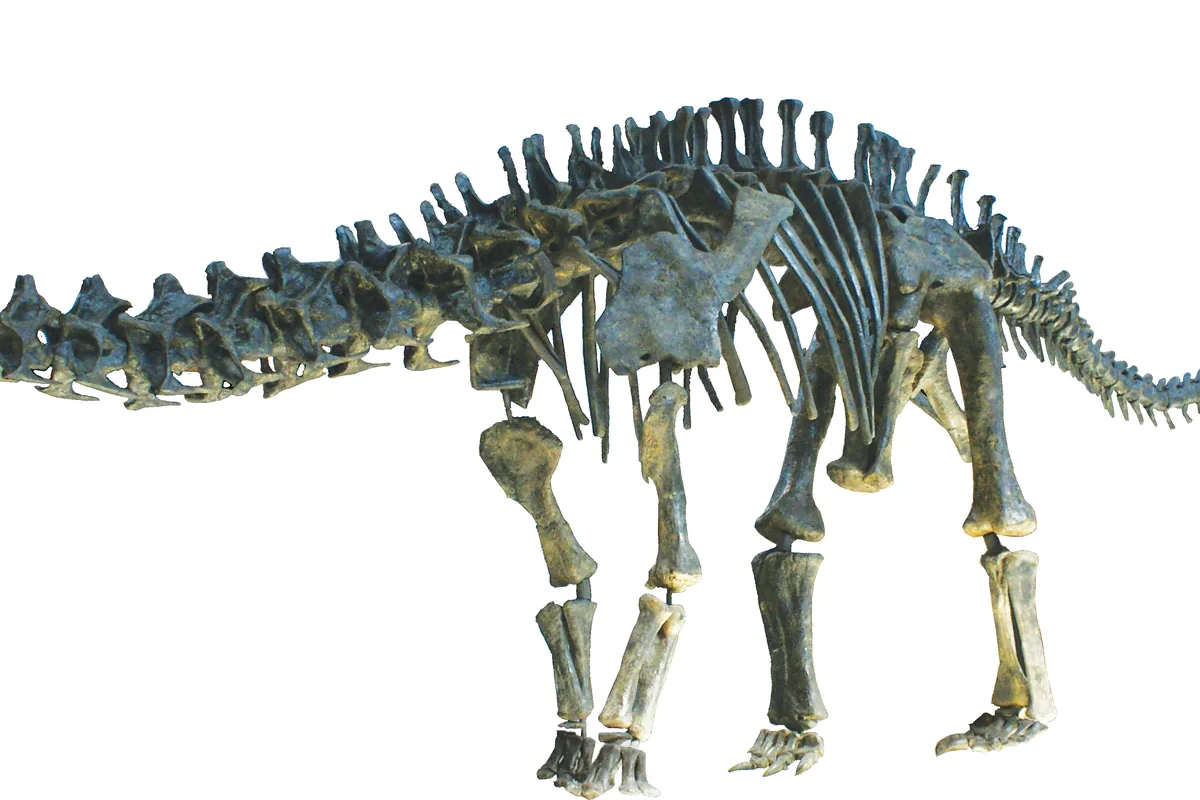
Camarasaurus is the best known sauropod found in North America and the most abundant of fossils in the Late Jurassic. A complete, nearly perfect skeleton of a juvenile, 17-feet (5.2-meters) long, was found in Utah. Its head was short and box like with nostrils set above the snout and in front of the eyes. The weight of its backbone was lightened by holes in its vertebrae. Its neck was shorter and thicker than mostsauropods and it possessed a short and somewhat flattened tail. The fore limbs and hindlegs of Camarasaurus were about the same length.
More Jurassic-period dinosaurs →
Reference background: Natural History Museum, London — Dinosaurs; Smithsonian National Museum of Natural History — Dinosaurs; American Museum of Natural History — Dinosaurs & Fossils. Figures are typical published ranges; taxonomy follows the source era and modern consensus is noted where it differs. See our sources & fact-check policy.
Frequently asked questions
What does Camarasaurus mean?
The name Camarasaurus means “Chambered Lizard”. It is pronounced kuh-MARE-uh-SAWR-us.
When did Camarasaurus live?
Camarasaurus lived during the Late Jurassic.
Was Camarasaurus a carnivore or a herbivore?
Camarasaurus was a herbivore.
How big was Camarasaurus?
Camarasaurus was about 60 feet (18.3 meters) long, around 23 feet (7 meters) tall, weighing up to 40,000 lbs (18,144 kg).
Related dinosaurs
Other dinosaurs from the Camarasauridae family.
Compare the dinosaurs
See size, diet, period and family for hundreds of dinosaurs side by side.
Compare dinosaurs →