Achelousaurus
Order: Ornithischia · Suborder: Ceratopsia · Infraorder: Ceratopsidae · Family: Ceratopsidae
Achelousaurus was a horned dinosaur that roamed the Late Cretaceous landscape of Montana. Measuring roughly 20 feet in length, this herbivore belonged to the ceratopsian family and displayed distinctive facial features that set it apart from many of its relatives. Rather than the pointed horns characteristic of other ceratopsians, Achelousaurus bore rough bony bosses on its snout and above its eyes. Its large bony frill, which extended backward from its skull, was adorned with a pair of long spikes.
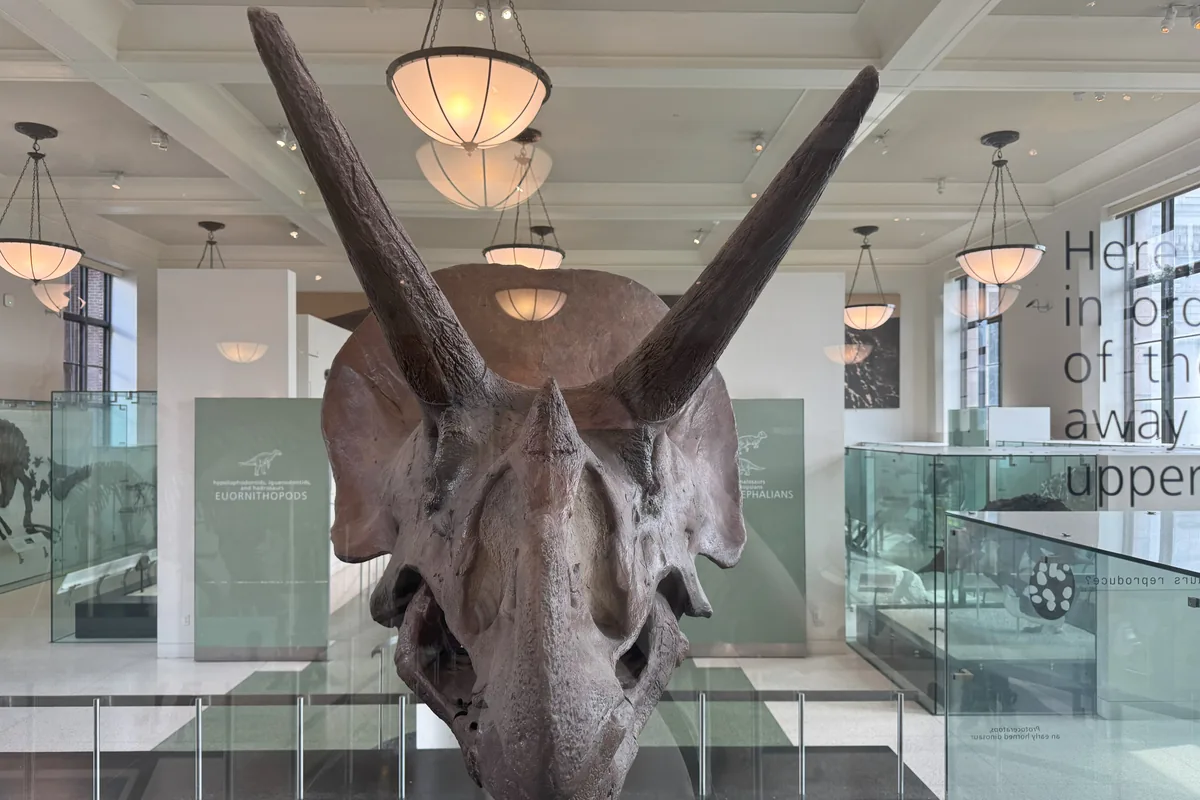
As a centrosaurine ceratopsian—a group of horned dinosaurs that includes some of the most recognizable species from the Cretaceous—Achelousaurus shared its Montana habitat with related forms such as Einiosaurus. Paleontologists have studied these animals together to trace how horned dinosaurs evolved and changed across time. Like other members of its family, Achelousaurus was a plant-eater that fed on low vegetation. It was equipped with a sharp beak suited for cropping plants and rows of tightly packed teeth designed to process plant material efficiently.
More Cretaceous-period dinosaurs →
Reference background: Natural History Museum, London — Dinosaurs; Smithsonian National Museum of Natural History — Dinosaurs; American Museum of Natural History — Dinosaurs & Fossils. Figures are typical published ranges; taxonomy follows the source era and modern consensus is noted where it differs. See our sources & fact-check policy.
Frequently asked questions
What does Achelousaurus mean?
The name Achelousaurus means “Achelous lizard”.
When did Achelousaurus live?
Achelousaurus lived during the Late Cretaceous.
Was Achelousaurus a carnivore or a herbivore?
Achelousaurus was a herbivore.
How big was Achelousaurus?
Achelousaurus was about 20 feet (6 meters) long.
Related dinosaurs
Other dinosaurs from the Ceratopsidae family.
Compare the dinosaurs
See size, diet, period and family for hundreds of dinosaurs side by side.
Compare dinosaurs →